
Voice Commerce, Visual Search, and AI Agents: The Future of Product Discovery

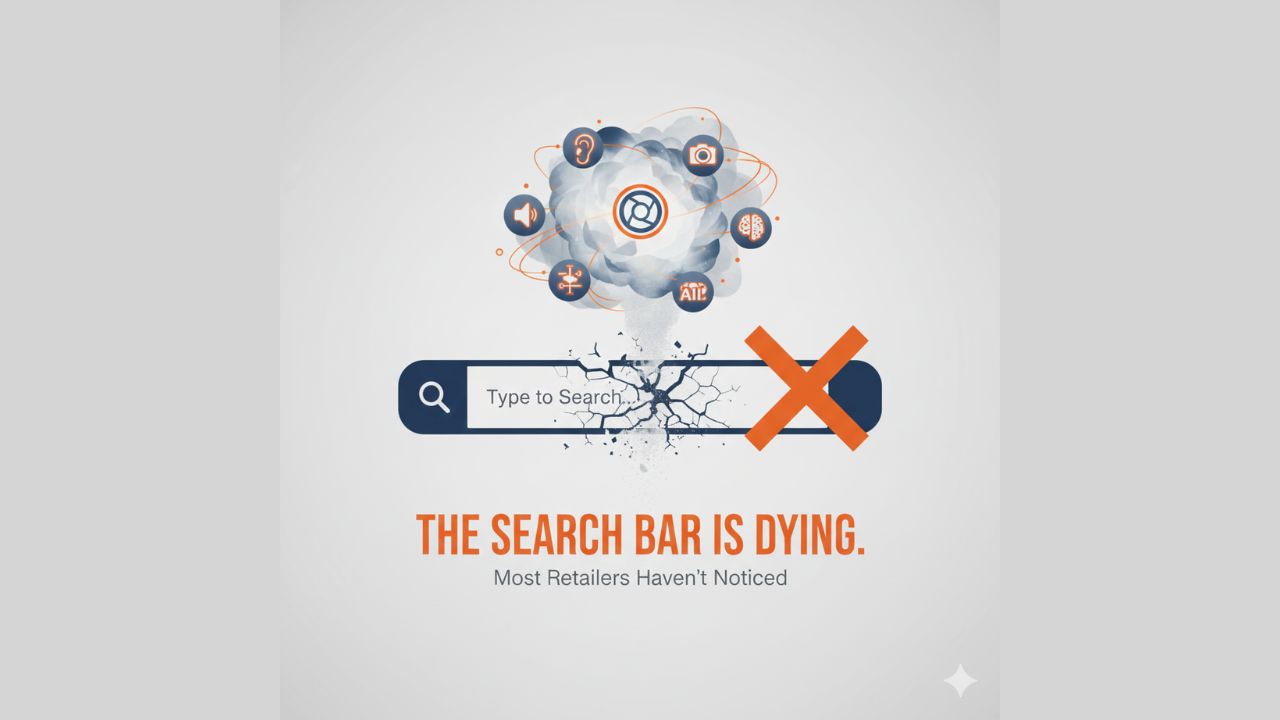
The Search Bar Is Dying
For two decades, the search bar was the gateway to commerce. Type a query, scan results, click, buy.
That model is collapsing. Fast.
Google Lens now processes 20 billion searches per month, up 100% year over year. Pinterest Lens queries are up 376% in five years. Voice commerce hit $27.4 billion in 2025 and is projected to reach $95 billion by 2035.
Amazon Rufus already has 10 million users in India asking questions like "what gift should I buy for my wife's birthday" instead of typing product keywords.
The shift isn't about adding features to existing search. It's a fundamental change in how discovery happens.
What's Actually Changing
From intent to inspiration.
Traditional search assumes customers know what they want. Visual and voice discovery assumes they don't.
Someone sees an outfit on Instagram, points their camera at it, and gets instant matches. They ask Alexa for "a good gift for a 12-year-old who likes science" without ever naming a product category.
The platforms capturing these queries are creating demand, not just fulfilling it.
The data proves the shift.
Visual and voice queries lift add-to-cart rates by 15 to 30% over typed search in fashion, beauty, and home goods. Google Lens users show AOV increases exceeding 18%. Gen Z shoppers now start nearly 50% of mobile purchases with voice or visual input.
These aren't experimental features. They're becoming the primary path.
AI agents are the new storefronts.
Amazon Rufus, Google's Shopping Assistant, and platforms like Insider and Constructor aren't just answering questions. They're curating entire shopping journeys.
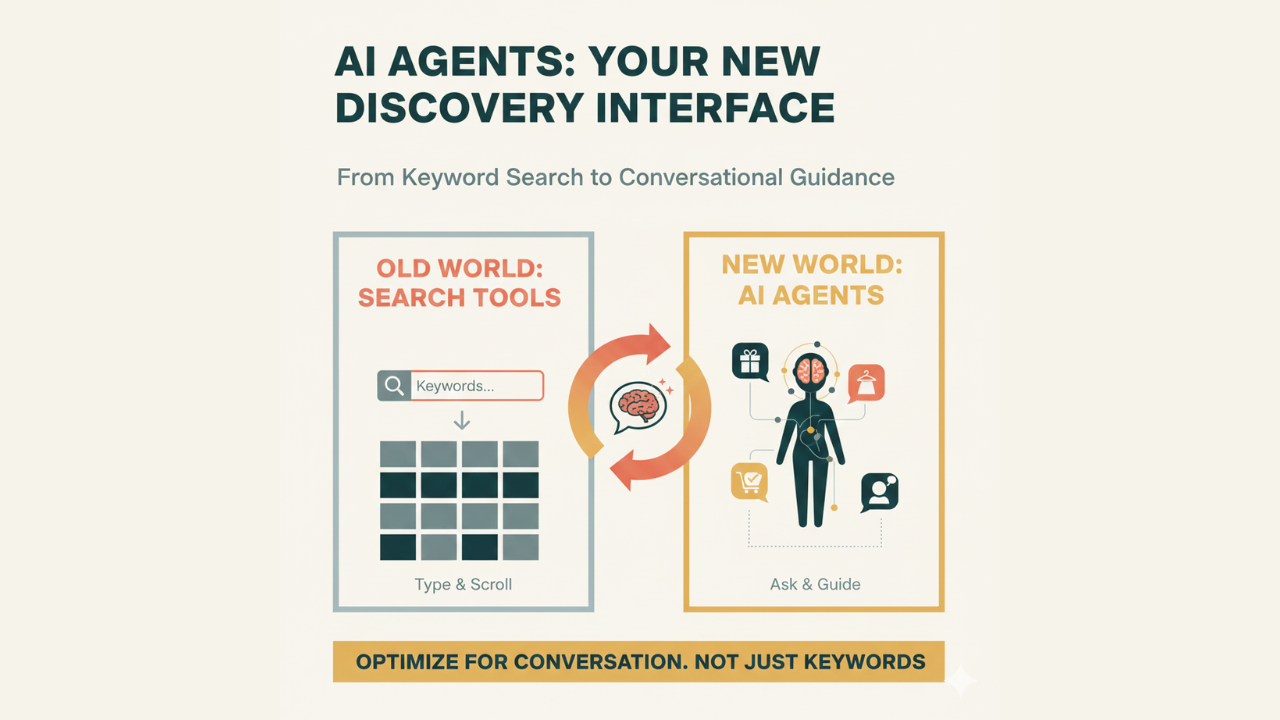
When someone asks "show me outfits for an outdoor wedding," the agent returns multi-product recommendations that would have required multiple searches in the old model. The customer delegates research to the AI. The AI delivers curated options.
If your products aren't structured for agent discovery, you're not in the consideration set.
Why Most Retailers Are Losing
The gap isn't awareness. It's infrastructure.
Most commerce teams are still optimizing for typed keyword search while customers have already moved to visual, voice, and conversational discovery.
Common failures:
- Product data optimized for human browsers, not machine parsing
- Missing structured attributes that agents need to match queries
- Batch inventory updates that lag reality by hours
- No schema.org markup for agent crawlers
- Generic image alt text that kills visual search visibility
AI agents don't browse your beautiful website. They query your API. If your data is incomplete or stale, they recommend competitors instead.
At Velou, we see this pattern constantly. Retailers with clean, complete product data surface in agent recommendations. Those with messy catalogs are invisible, regardless of product quality or pricing.
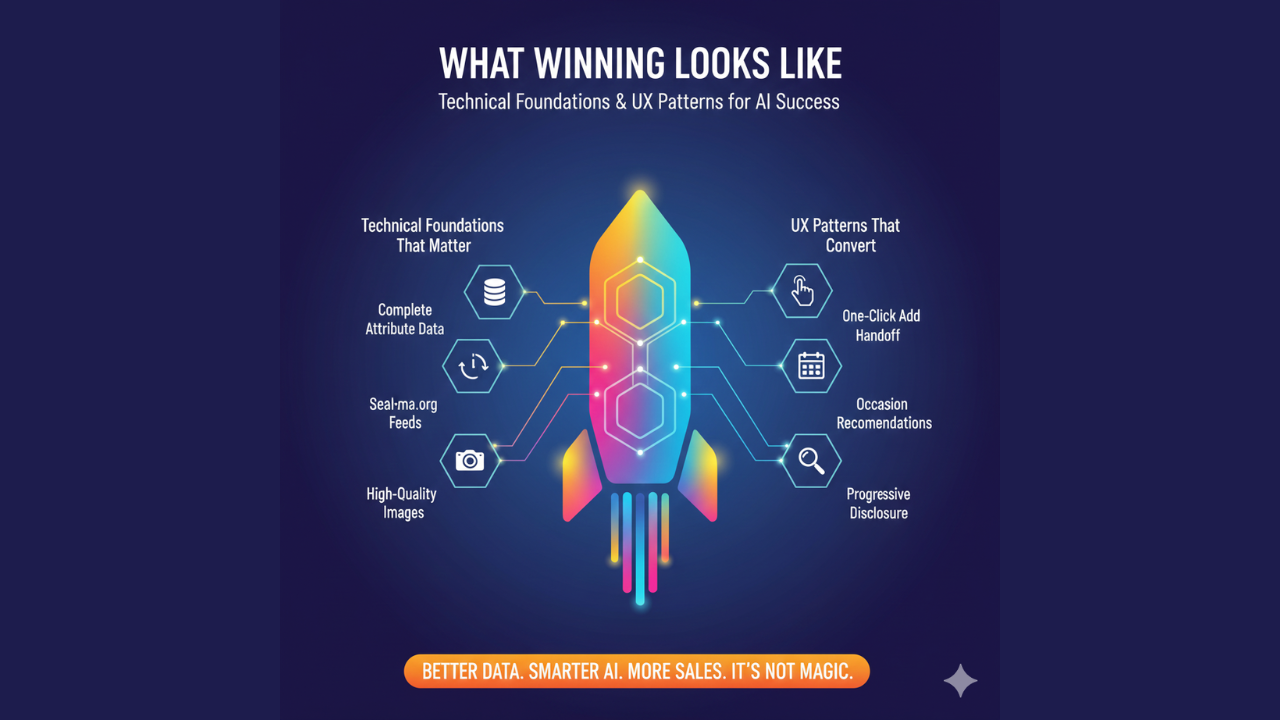
What Winning Looks Like
Technical foundations that matter:
- Complete attribute data: size, color, material, use case, fit
- Real-time inventory and pricing feeds with 15-minute refresh cycles
- Schema.org markup that validates across Google, OpenAI, and other platforms
- High-quality images with unique, descriptive alt text
- Consistent taxonomy across all channels
UX patterns that convert:
- One-click add from visual or voice search results
- Seamless handoff between visual, voice, and text inputs
- Occasion-based recommendations ("show me dresses for a summer wedding")
- Progressive disclosure that starts broad and narrows by context
The retailers seeing 25 to 30% conversion lifts aren't using different AI. They have better data feeding the same systems everyone else uses.
The Path Forward
This isn't a future problem. Agent-driven discovery is live in production, handling millions of daily transactions.
Three priorities for retail leaders:
- Audit your product data for AI readiness. Measure attribute completeness, schema validation, and API performance.
- Rebuild your catalog infrastructure for machine consumption, not just human browsing.
- Measure success by agent recommendation acceptance, not just keyword rankings.
The retailers dominating commerce in three years will be the ones who recognized that typed search is declining and rebuilt their discovery infrastructure accordingly.
Velou helps retailers bridge this gap by transforming product data into AI-ready formats that surface in agent-driven discovery. The technology exists. The customer behavior has shifted. The only question is whether your infrastructure is ready.
The search bar had a good run. What comes next rewards the prepared.

.png)
.png)