
The Product Data Checklist for AI Agent Readiness

Your Catalog Is Invisible to AI
AI agents are making purchasing decisions for millions of customers daily. They recommend products, compare options, and complete transactions based on structured data they parse in milliseconds.
If your product catalog isn't optimized for machine readability, you don't exist.
This isn't theoretical. ChatGPT, Amazon Rufus, and Google's Shopping Assistant are live in production right now. When these agents can't confidently match your products to customer needs, they recommend your competitors instead.
United RV saw a 44% conversion lift from fixing product titles and feed completeness. Auto One drove 139% organic revenue growth with real-time catalog updates.
These weren't AI moonshots. They were checklist-driven infrastructure fixes.

Why Most Catalogs Fail
AI agents don't browse your website. They query structured data.
The common gaps:
- Missing GTIN/UPC codes (agents can't reliably identify products)
- Incomplete size, color, material, and use case attributes
- Generic or duplicated image alt text
- Stale inventory and pricing feeds
- Inconsistent taxonomy across channels
- No schema.org markup for agent crawlers
Every missing field reduces the queries your products can match. An 80% complete catalog isn't 80% as effective. It's functionally invisible for any query requiring those missing fields.
At Velou, we see this constantly. Retailers assume their data is "good enough" because it works for their website. But AI agents have fundamentally different requirements. They need structured attributes, not marketing copy. Real-time inventory, not daily batch updates.
The Checklist That Actually Matters.
Must-have foundations:
- GTIN/UPC/EAN codes validated against GS1 standards
- Schema.org/Product markup on all product page s and APIs
- Complete attribute data: size, color, material, fit, use case, price, stock
- Minimum three high-quality images per SKU with unique, descriptive alt text
- Real-time or 15-minute refresh API feeds for inventory and pricing
- Consistent taxonomy applied across all channels
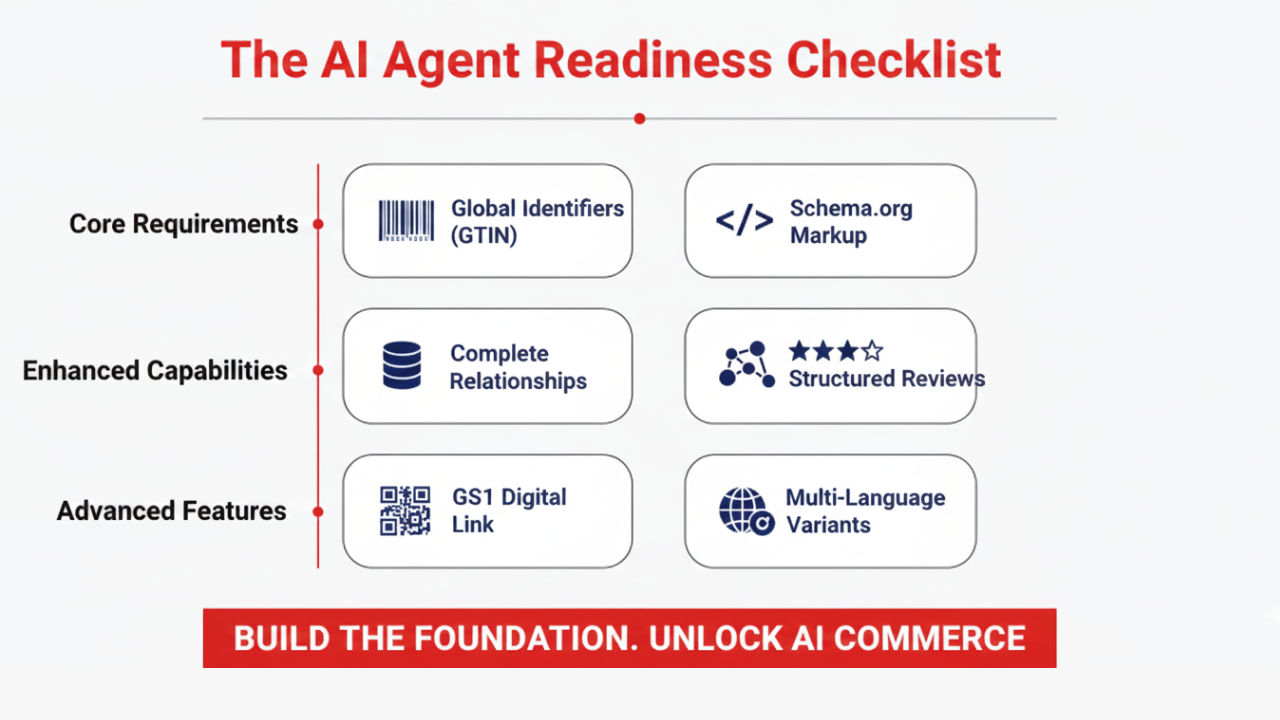
Enhanced capabilities:
- Product relationship mapping for variants, bundles, and accessories
- Structured review and rating data in schema-compliant formats
- Category-optimized alt text following platform-specific guidelines
Advanced features:
- GS1 Digital Link support for traceability
- Rich product embeddings for semantic search
- Multi-language variants for global agent platforms
Validation and Monitoring
Data quality isn't a one-time cleanup. It's ongoing operational discipline.
What to track:
- Attribute completeness percentage by category
- Schema validation pass rate (use Google's Rich Results Test)
- API latency and uptime
- Inventory accuracy compared to real-time stock
- Agent recommendation acceptance rate for your products
How to catch drift:
- Monthly attribute audits with dashboard tracking
- Automated schema validation in publishing workflows
- A/B testing of enriched vs. legacy feeds for conversion impact
The retailers winning in agent-driven discovery treat data quality like site uptime. When it degrades, alarms go off. Teams respond immediately.
The Cost of Waiting
AI agents learn from outcomes. When they recommend a product and it converts, they increase its weight in future recommendations. When data is incomplete or inventory is stale, they deprioritize not just that SKU but your entire catalog.
Agent algorithms build merchant-level trust scores. Once you've lost trust, rebuilding takes time.
Every day you delay, competitors with cleaner data compound their advantage.
Velou helps retailers transform messy product catalogs into AI-ready data structures that surface in agent-driven discovery. The technical lift isn't the bottleneck. It's recognizing that your product data is now your primary customer interface.
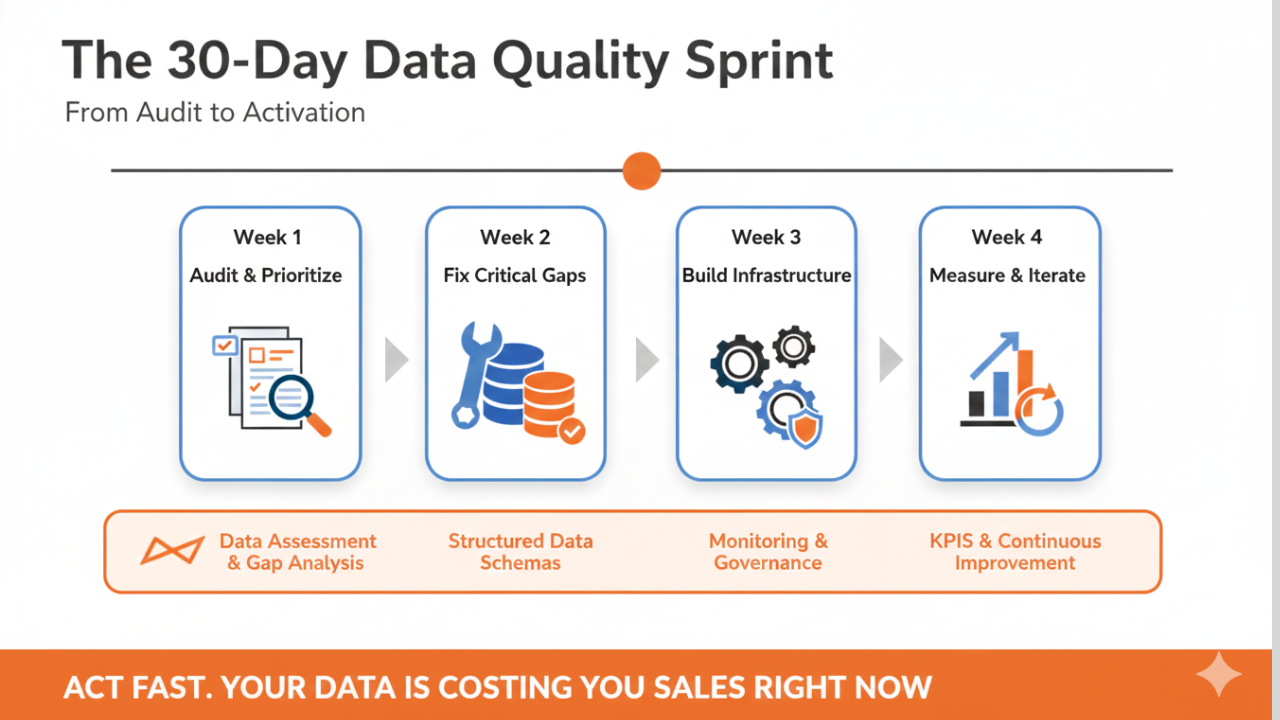
A 30-day data quality sprint costs a fraction of one month's paid search budget. The ROI pays back in quarters, not years.
Your checklist is your competitive moat. Start checking boxes.

.png)
.png)