
The Disappearing Brand: What Happens When AI Becomes the Curator

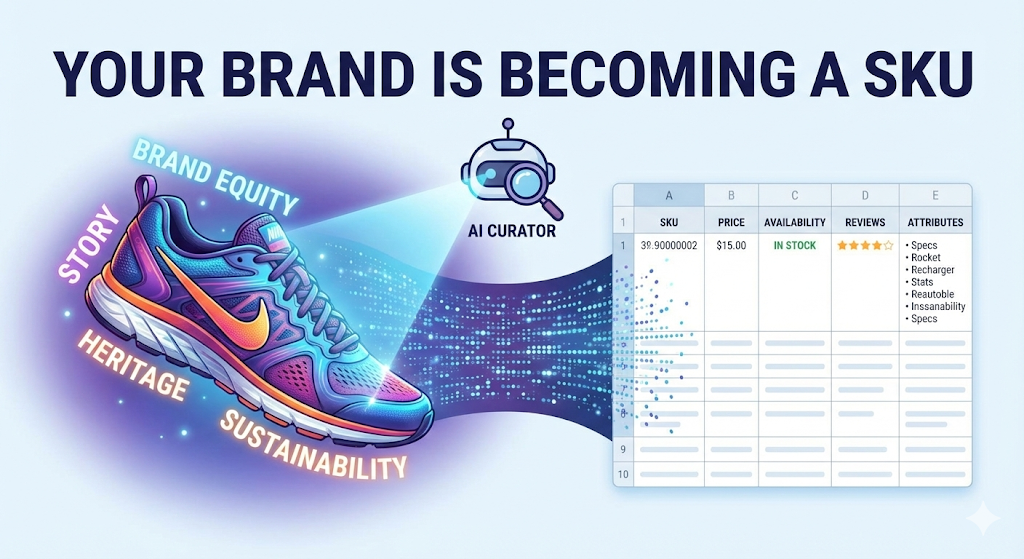
Your Brand Is Becoming a SKU
Brand equity took decades to build. AI curators can erase it in seconds.
When a customer asks ChatGPT or Rufus to recommend running shoes, the agent doesn't show your brand story. It doesn't surface your sustainability commitments or heritage craftsmanship.
It returns a ranked list based on price, availability, reviews, and structured attributes.
Your brand becomes a SKU in a spreadsheet optimized for conversion efficiency.
This isn't hypothetical. It's happening now.
The Commodification Problem
AI agents abstract away storefronts, minimize brand storytelling, and present products as interchangeable commodities differentiated only by price and metadata.
The result is a race to the bottom: lowest price wins, or best meta-credentials win. Everything else—brand voice, positioning, customer relationships—gets compressed into a bullet point or ignored entirely.
Starbucks and Nike spent billions building brand equity that drives premium pricing and loyalty. In an AI-curated world, they're competing on the same playing field as unbranded alternatives with identical specs and lower prices.
The customer never sees the brand narrative. They see "coffee, $4.50, 4.3 stars" versus "coffee, $3.20, 4.1 stars."
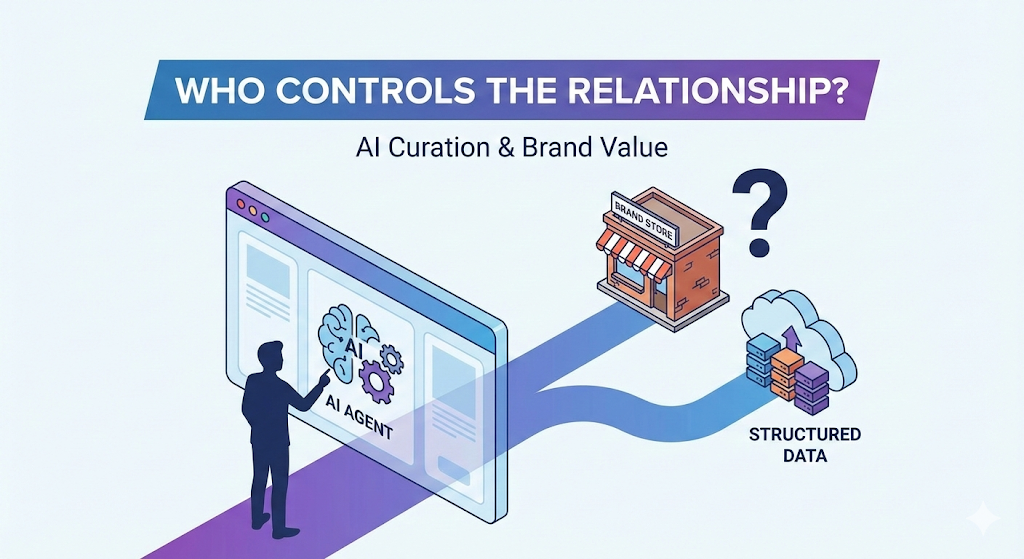
Who Controls the Relationship?
AI curation doesn't just change discovery. It changes who controls the relationship.
Brands used to own the storefront, the narrative, and the first impression. AI agents own all three now.
The brand becomes data. And if your data isn't structured to preserve differentiation, you're invisible or commoditized.
The gap isn't that brands lack value. It's that AI systems don't know how to represent it.
Most recommendation engines are trained on behavioral signals, pricing, and reviews—not brand heritage, ethical sourcing, or design philosophy. Those attributes don't have schema markup. They don't surface in structured feeds.
So agents ignore them.
How to Preserve Brand Value
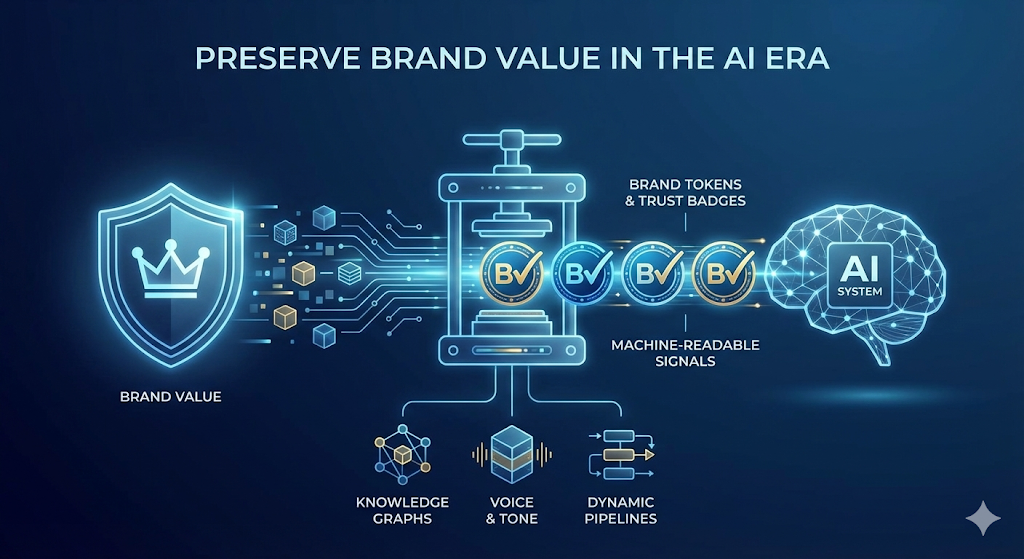
The brands that survive this transition will be the ones who encode their differentiation into machine-readable signals that AI systems can parse, weight, and surface.
Brand tokens and trust badges.
Digital verification symbols embedded in recommendation schemas that signal authenticity, quality, and provenance. If AI can't parse your brand authority, it treats you like a generic alternative.
Brand-authored knowledge graphs.
Structured data feeds that encode brand narratives, values, sustainability practices, and product stories in ways AI agents can retrieve and present. Not marketing fluff—authoritative metadata tied to verifiable claims.
Voice and tone training.
Partner with AI developers to tune how agents describe your brand. If the assistant recommends your product, it should reflect your voice, not generic retail language. This requires direct engagement with platform providers.
Registered catalog APIs with contractual protections.
Negotiate terms that guarantee brand representation standards and usage rights. Ensure platforms can't strip your brand context without consent. Legal agreements matter when algorithms control distribution.
Dynamic brand content pipelines.
Build systems that adapt brand messaging in real time based on context, customer segment, and platform. Static product pages don't compete with agents that personalize on the fly.
The Vicious Cycle
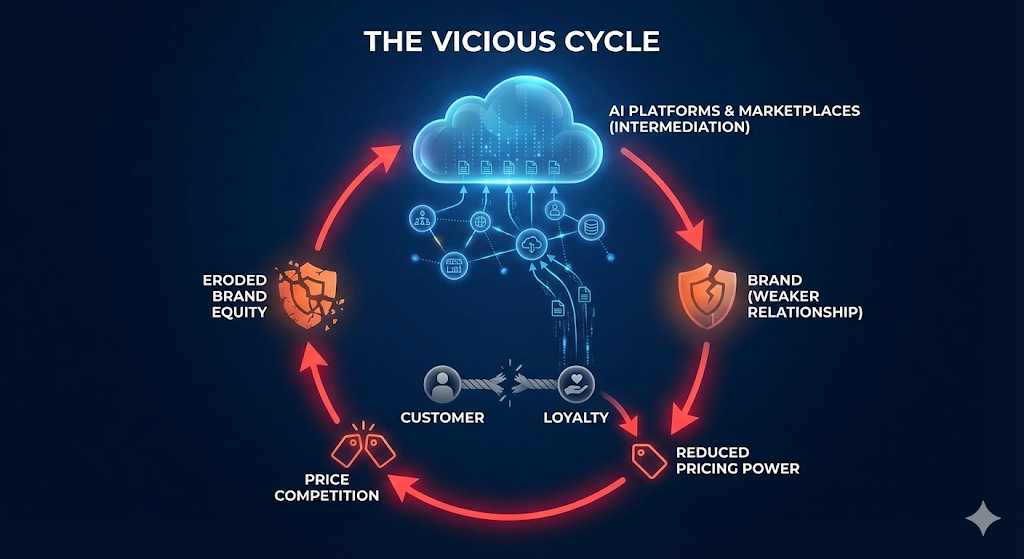
Large platforms and AI marketplaces are capturing interaction data at scale, weakening direct brand-customer relationships.
When Amazon or ChatGPT intermediates the purchase, the customer's loyalty flows to the platform, not the brand. Repeat purchases happen because the agent recommended it again, not because the customer remembered your story.
This creates a vicious cycle: less brand visibility leads to weaker customer relationships, which reduces pricing power, which forces brands to compete on price, which further erodes equity.
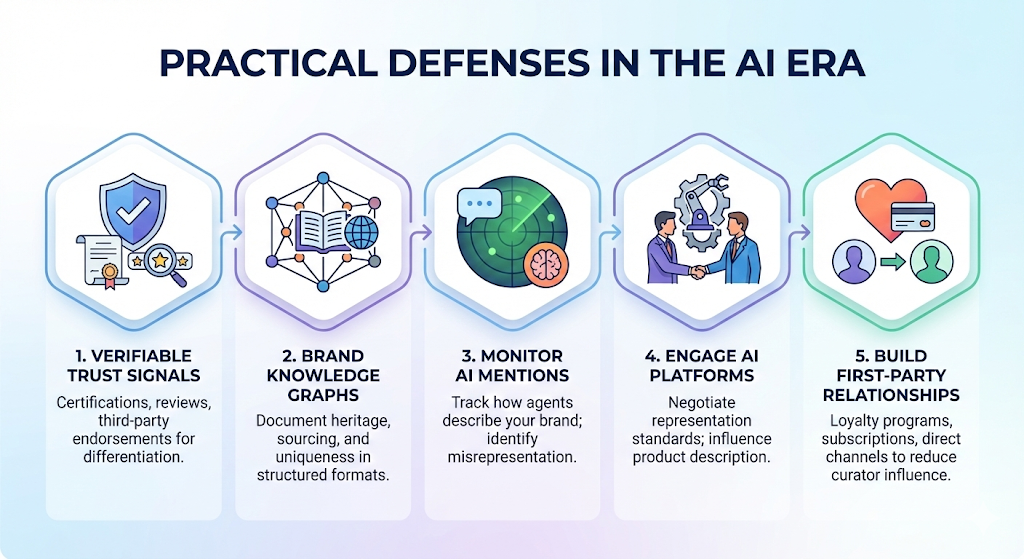
Practical Defenses
Invest in verifiable trust signals.
Certifications, review programs, third-party endorsements that AI agents can surface as differentiation points.
Publish comprehensive brand knowledge graphs.
Document heritage, sourcing practices, design philosophy, and product uniqueness in structured formats AI systems can ingest.
Monitor brand mentions in AI interactions.
Use tools to track how agents describe your brand and identify misrepresentation or absence. Optimize based on what's surfacing.
Engage AI platforms directly.
Don't wait for them to come to you. Negotiate representation standards. Influence how your products are described and positioned.
Build first-party relationships aggressively.
Loyalty programs, subscriptions, direct channels. The more customers interact with you directly, the less influence AI curators have over future purchases.
The Long Game
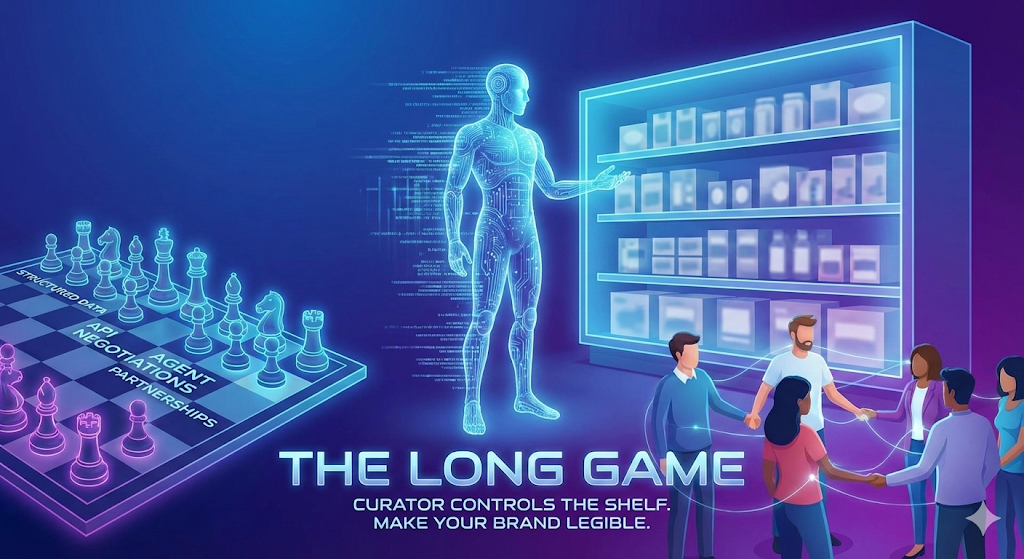
The brands that thrive in 10 years won't be the ones with the best products. They'll be the ones whose differentiation is legible to AI systems and whose customer relationships can't be intermediated by platforms.
If your brand strategy doesn't include structured data, API negotiations, and agent partnerships, you're building equity that AI can't see and customers won't experience.
The curator controls the shelf. Make sure your brand isn't just another box on it.

.png)
.png)