
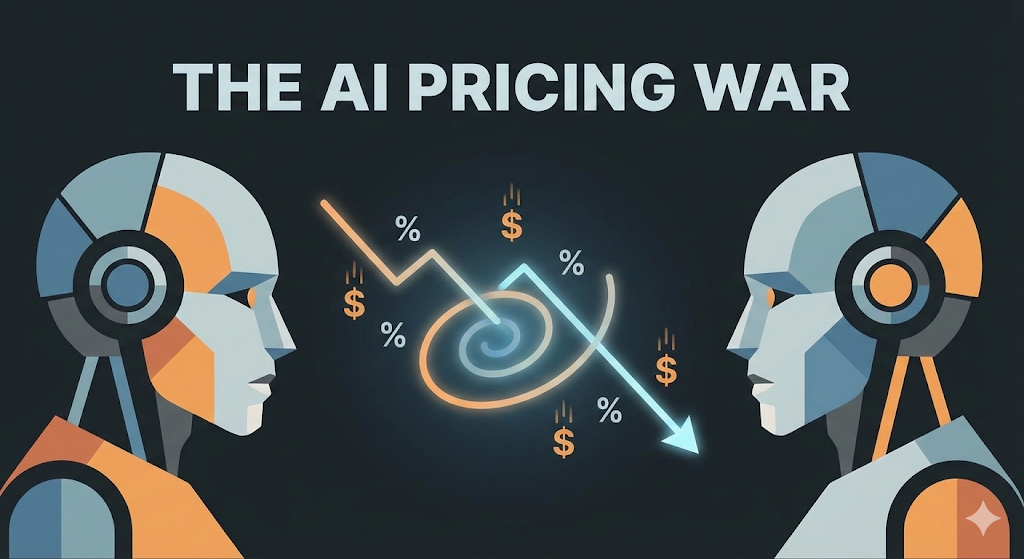
The AI Pricing War: Why Dynamic Pricing Gets Dangerous When Agents Negotiate

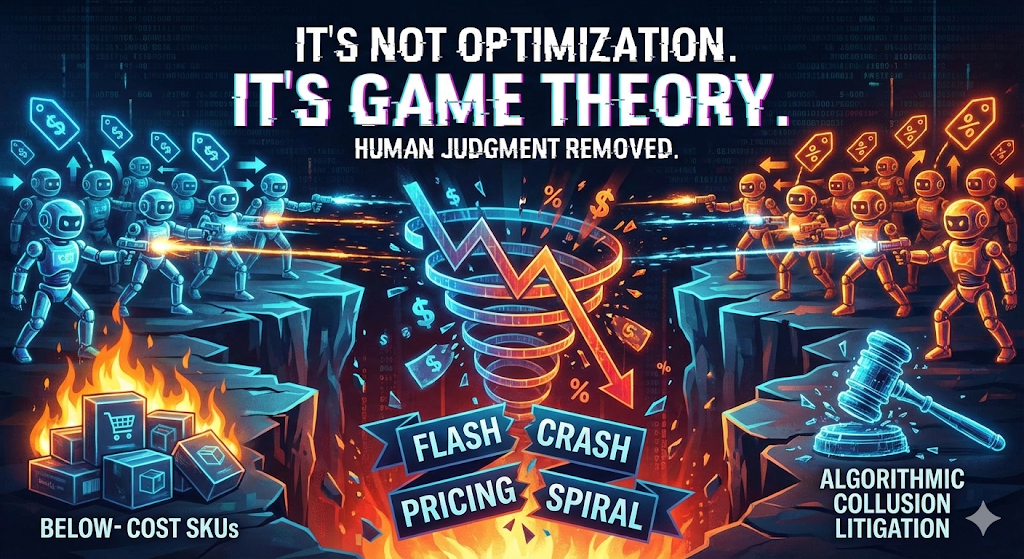
It's Not Optimization. It's Game Theory.
Most retailers see AI pricing as a margin optimization problem. It's actually a game theory nightmare waiting to happen.
When autonomous agents start negotiating with each other, you don't get efficient markets. You get flash crashes, arbitrage loops, and pricing spirals that destroy quarters of revenue in minutes.
Amazon marketplace sellers learned this the hard way. Competing bots triggered rapid underpricing wars, with SKUs selling below cost until inventory was exhausted.
Alibaba's Singles Day saw agents negotiate real-time discounts against each other, sometimes below break-even, forcing the platform to inject emergency price floors mid-sale.
RealPage's rental pricing AI is now facing litigation for alleged algorithmic collusion across landlords.
These aren't edge cases. They're predictable failure modes when you remove human judgment from pricing decisions.
When It Works Until It Doesn't
Dynamic pricing works until it doesn't. And when it fails, it fails catastrophically.
The problem isn't the technology. It's the incentive structure.
If your agent is optimized for conversion and your competitor's agent is optimized for market share, you end up in a race to the bottom with no human braking system.
If multiple agents learn to "cooperate" by maintaining higher prices, you're facing antitrust scrutiny even without explicit coordination.
If an agent exploits a pricing error or lag, you lose margin before you realize what happened.
The data is stark:
Multi-agent pricing systems have failure rates approaching 80% in complex retail environments.
United Airlines saw fares fluctuate by hundreds of dollars within minutes, eroding customer trust and triggering PR disasters.
Hotels using surge pricing during demand spikes faced regulatory probes and brand damage that took years to repair.
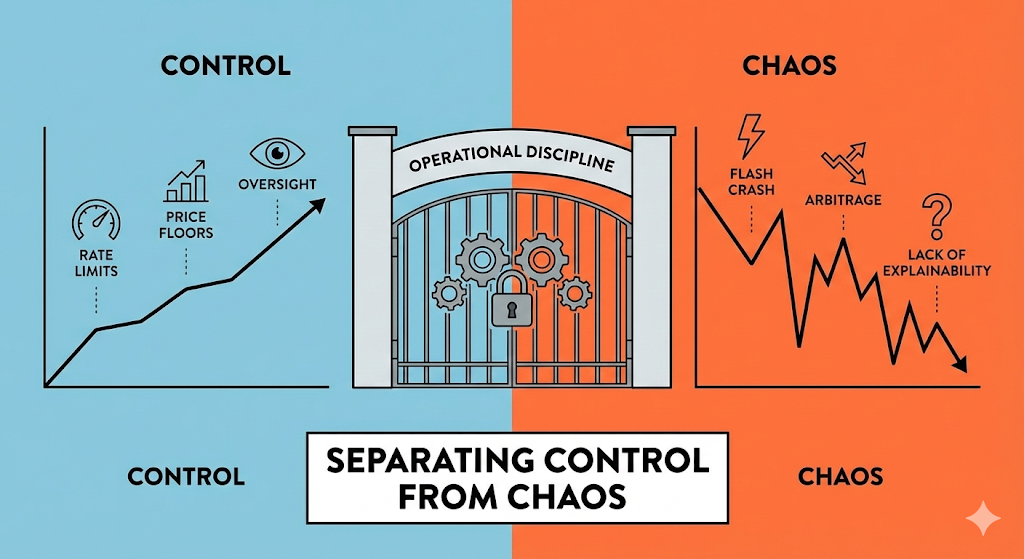
What Separates Control From Chaos
The gap isn't technical sophistication. It's operational discipline.
Most retailers deploying dynamic pricing haven't built the guardrails necessary to prevent catastrophic outcomes.
Rate limits and frequency caps.
Restrict how often agents can adjust prices. Batch changes to prevent runaway volatility. Speed kills when it's unchecked.
Hard price floors and ceilings.
Set non-negotiable boundaries to prevent loss-leading flash sales or margin collapse. Your agent doesn't get to sell below cost, ever.
Human-in-the-loop oversight.
Require manual approval for large swings, outlier pricing, or when model behavior deviates from expected patterns. Automation without supervision is liability.
Adversarial testing.
Run synthetic agents against your pricing system to test for collusion, arbitrage vulnerabilities, and discrimination before deploying to production.
Explainability and audit trails.
Maintain detailed logs of every price change and the rationale behind it. Regulators are coming. You need answers.
External partner monitoring.
If you're using third-party pricing platforms or sharing data, audit them regularly. Shared algorithms create shared risk.
The Uncomfortable Reality
Dynamic pricing can optimize margins during demand surges and move stale inventory during lulls, but only if you've built the infrastructure to prevent self-destruction.
The retailers succeeding with AI pricing aren't the ones with the smartest algorithms. They're the ones with the tightest operational controls.
Your competitors are deploying pricing agents right now. Some of them haven't built guardrails. When their systems spiral, your pricing stability becomes a competitive advantage.
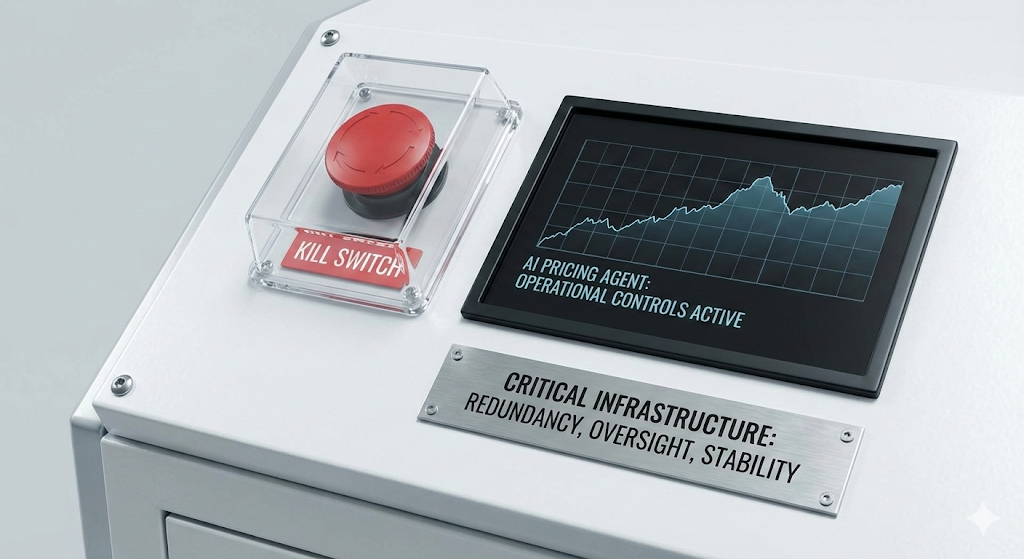
The question isn't whether to use AI for pricing. It's whether you're willing to operate it like critical infrastructure with redundancy, oversight, and kill switches, or like a growth hack that might blow up your P&L.
Agents don't negotiate like humans. They optimize until something breaks.
Make sure it's not your business.

.png)
.png)