
The AI Commerce Moat: Why First-Party Data is Your Only Defensible Asset

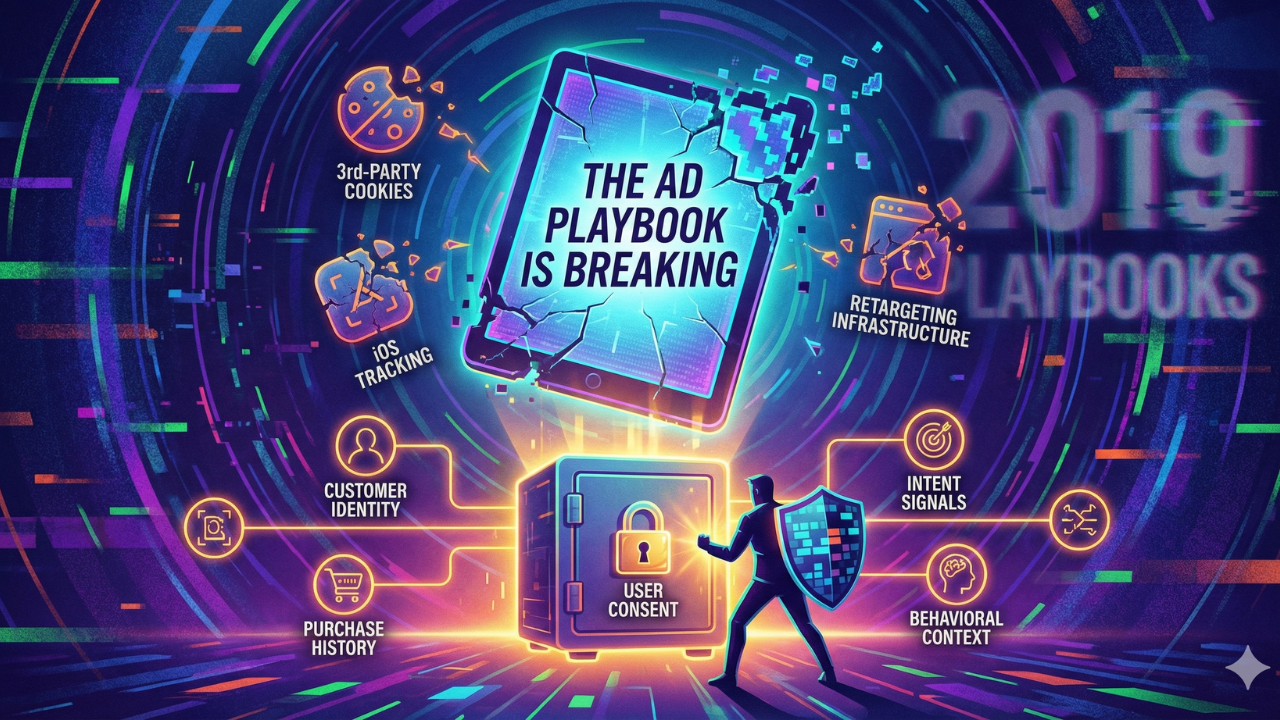
The Ad Playbook Is Breaking
Third-party cookies are dead. iOS tracking is blocked. GDPR and CCPA have dismantled the retargeting infrastructure that powered e-commerce growth for a decade.
Most brands are still running 2019 playbooks in a 2025 reality.
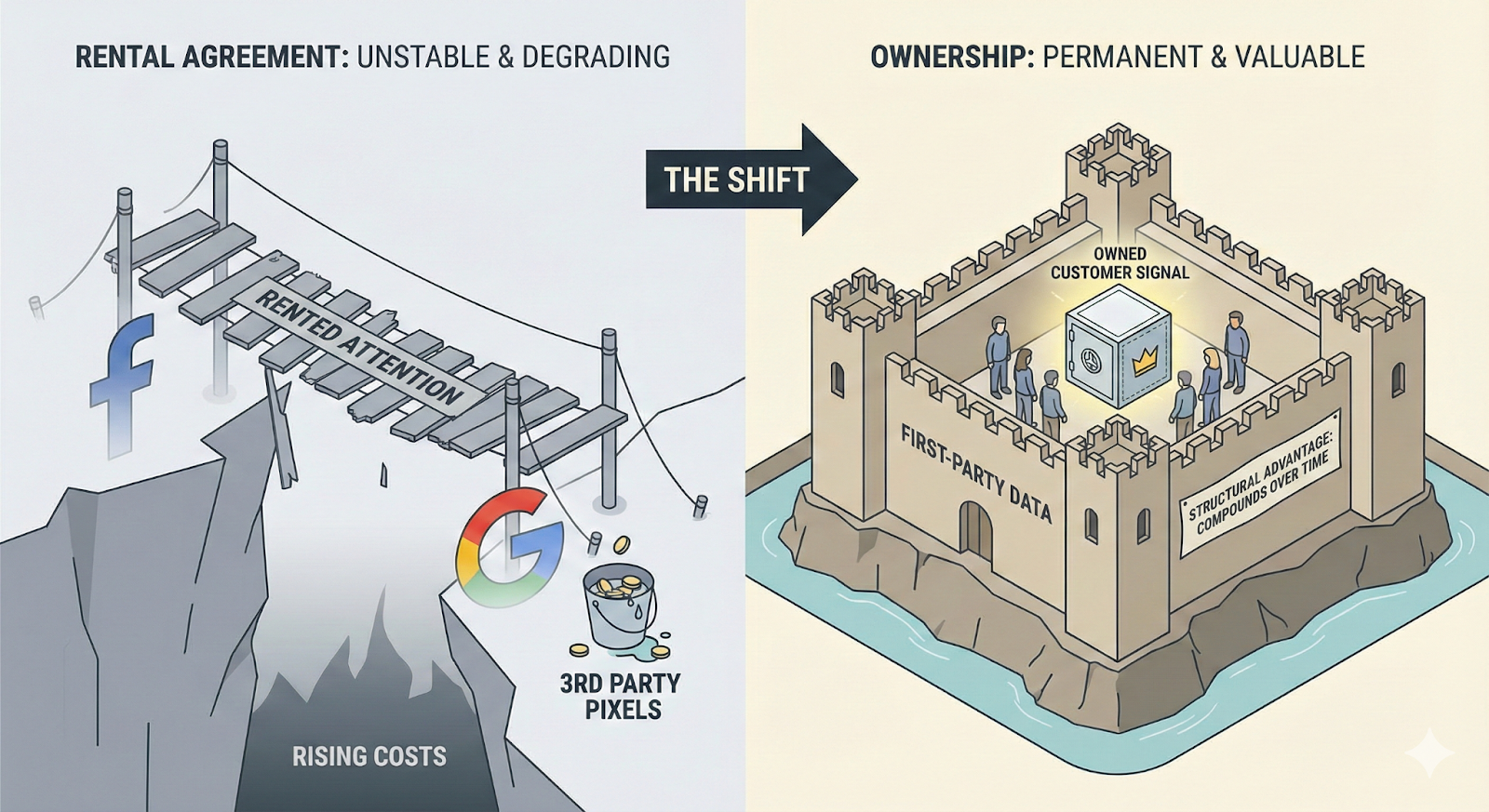
The only defensible asset left is data you own directly: customer identity, purchase history, intent signals, and behavioral context captured with consent.
Everything else is degrading noise.
The Data Speaks
Brands using Meta's Conversions API with first-party data see 20 to 30% higher ROAS than those relying on third-party signals.
Klaviyo users with extended first-party tracking recover 35% more revenue from abandoned carts by targeting known visitors instead of anonymous sessions.
D2C brands in fashion and beauty using loyalty and purchase history for AI-powered offers are driving conversion lifts above 18%.
These aren't marginal improvements. They're the difference between profitable growth and bleeding cash into degraded ad networks.
AI Agents Don't Care About Your Ad Budget
When someone asks ChatGPT or Rufus for a product recommendation, the agent doesn't see your retargeting campaign.
It sees whether you have a direct relationship with that user. Purchase data. Preferences. Consent-based signals that enable personalized, contextual suggestions.
If you don't own that data, you compete on price.
If you do, you compete on relevance.
At Velou, we see this dynamic constantly. Brands with rich first-party data surface in agent recommendations with higher confidence. Those dependent on third-party pixels are invisible or commoditized.
The customer relationship is the signal. Without it, you're just another SKU in a price comparison.

Why Most Brands Are Failing
The problem isn't awareness. It's fragmentation.
Common patterns we see:
- Email data in one system
- POS in another
- Website behavior in a third
- No unified customer profile
- No predictive modeling
- No activation layer feeding AI agents or personalization engines
Meanwhile, the regulatory environment keeps tightening. GDPR, CCPA, iOS restrictions. The brands that treat first-party data as a compliance advantage are winning. Those treating it as overhead are losing signal quality every quarter.
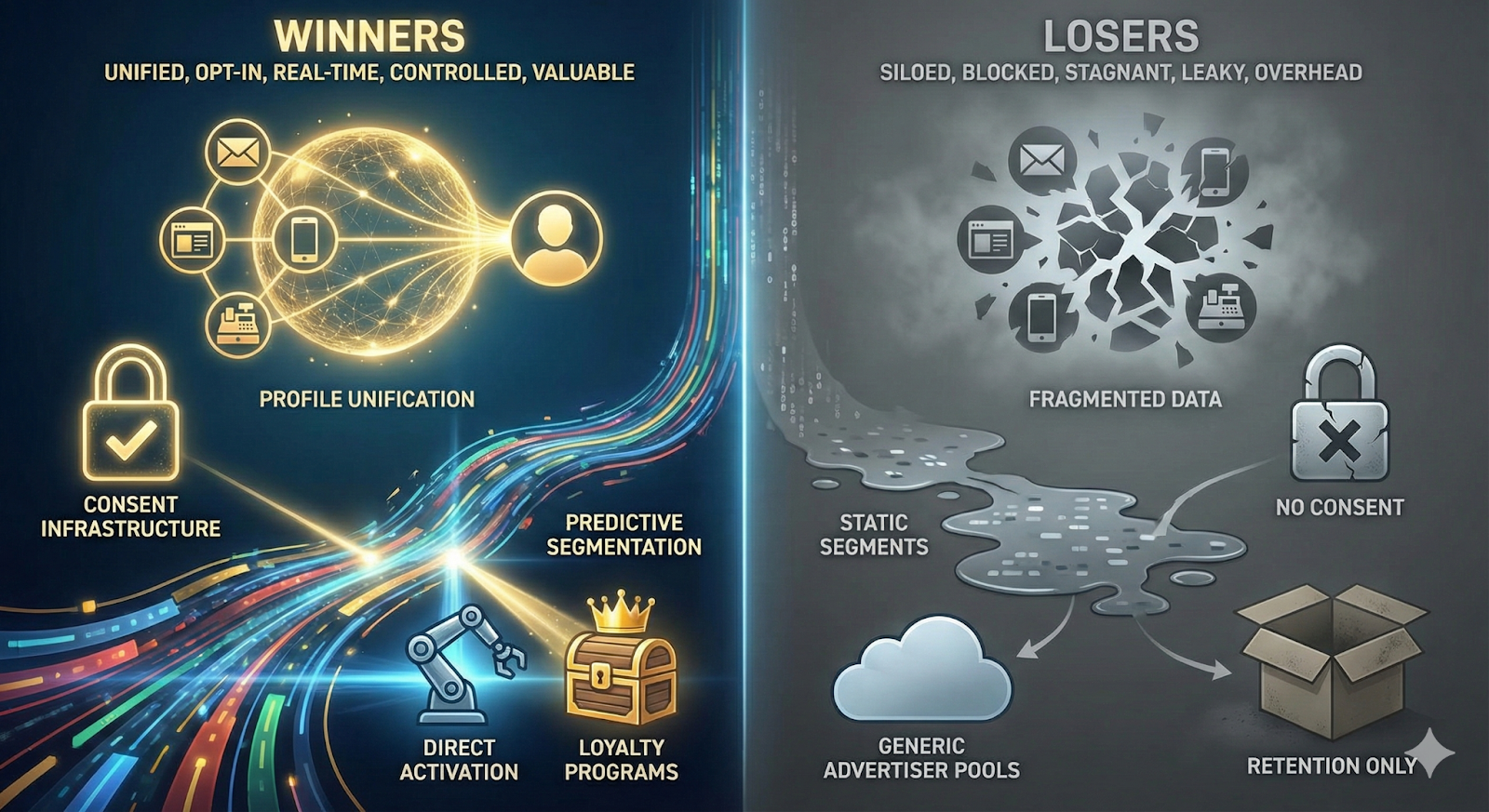
What Separates Winners From Losers
Profile unification.
Aggregate email, site, app, and POS data into a single customer view. Fragmented data is worthless. A unified profile enables prediction, personalization, and activation at scale.
Consent infrastructure.
Privacy-safe data capture with explicit opt-ins. This isn't legal overhead. It's the foundation of every AI personalization loop and the only way to maintain signal quality as regulations tighten.
Predictive segmentation.
Use recency, frequency, and intent signals to trigger proactive offers. Static segments are dead. Dynamic, AI-driven cohorts that update in real time are the standard.
Direct activation.
Feed customer data into AI agents, chatbots, email, and ads without leaking to generic advertiser pools. Control the signal, control the outcome.
Loyalty programs that actually work.
Subscriptions, memberships, and rewards aren't just retention plays. They're data acquisition strategies. Trade access for enrichment. Make the value exchange explicit.
How Velou Helps
Velou transforms fragmented customer data into unified, AI-ready profiles that power personalization across every touchpoint.
We help brands build consent infrastructure, enrich customer profiles with behavioral and transactional signals, and activate that data in AI agents, email, and on-site experiences.
The technical lift isn't the barrier. It's recognizing that your customer file is your competitive moat and treating it accordingly.
Your competitive advantage isn't your product catalog or your ad creative. It's the depth and quality of customer relationships you can prove and activate.
Start building your moat today.

.png)
.png)